Healing Through Presence and Grace: Celebrating Our Denver Hospice Chaplains
Every year, Spiritual Care Week provides an opportunity to recognize the chaplains and spiritual care providers who offer compassionate support to people navigating some of life's most significant moments.
From October 18–24, 2026, we celebrate Spiritual Care Week under the theme “Healing Through Presence and Grace.”
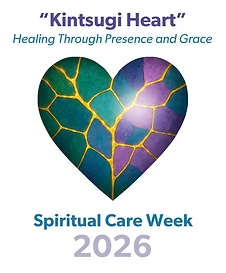
This year's theme features kintsugi, the Japanese art of repairing broken pottery with precious metals. Rather than concealing the cracks created by breakage, kintsugi highlights them, transforming them into a visible part of the object's story.
It is a fitting symbol for the work of hospice chaplains.
Being Present Through Life's Difficult Moments
Hospice care recognizes that caring for the whole person means caring not only for physical needs, but also for emotional and spiritual well-being.
Our chaplains at The Denver Hospice provide a compassionate presence for patients and families as they navigate illness, grief, loss, uncertainty, and transition.
Their role can take many forms.
A chaplain might sit quietly with a patient. They might listen to stories about a person's life and loved ones. They may offer prayer, scripture, or a religious ritual when requested. They may help someone explore questions about meaning, purpose, forgiveness, hope, or legacy.
And sometimes, they simply listen.
There is tremendous value in having someone present who does not need to fix the situation or provide an easy answer—someone who can simply accompany you through it.
Spiritual Care for Every Person
At The Denver Hospice, our chaplains support people of all faiths, spiritual traditions, and beliefs. They also provide compassionate care to people who do not identify with a particular faith.
Every person's spiritual journey is unique.
For one person, faith may be an important source of comfort. For another, connection may come through family, nature, music, memories, personal values, or a sense of purpose. Some people may have questions about faith, while others may not wish to discuss spirituality at all.
Our chaplains honor all of these experiences.
Their work begins with listening and understanding what matters to each individual.
Walking Alongside Patients and Families
Spiritual care is not about changing someone's beliefs or providing answers to questions that may not have simple answers.
It is about companionship.
When people experience loss, they may need an opportunity to tell their story. They may want to talk about the people they love, revisit meaningful memories, express gratitude, work through unresolved feelings, or simply have someone sit beside them.
Our chaplains provide a space where those experiences can be shared openly and respectfully.
They walk alongside patients and families without judgment, offering compassion and a steady presence.
Finding Meaning in the Cracks
The image of kintsugi reminds us that healing doesn't necessarily mean returning to the way things were before.
Grief changes us. Loss changes us. Life changes us.
But the presence of compassionate people can help us navigate those changes and discover moments of meaning, connection, and resilience.
Our chaplains are part of that journey for the patients and families they serve.
Their work may not always be visible, but its impact can be profound.
Thank You to Our Chaplains
During Spiritual Care Week, we want to express our deepest gratitude to the chaplains of The Denver Hospice.
Thank you for listening when someone needs to be heard.
Thank you for sitting with people in moments when there are no easy words.
Thank you for honoring every person's faith, beliefs, questions, and traditions.
Thank you for supporting people of all faiths—and those who do not identify with a particular faith.
And thank you for reminding us that sometimes, presence itself can be a form of healing.
We are grateful for the grace, compassion, and humanity you bring to hospice care every day.
Go Back